
2026-02-24
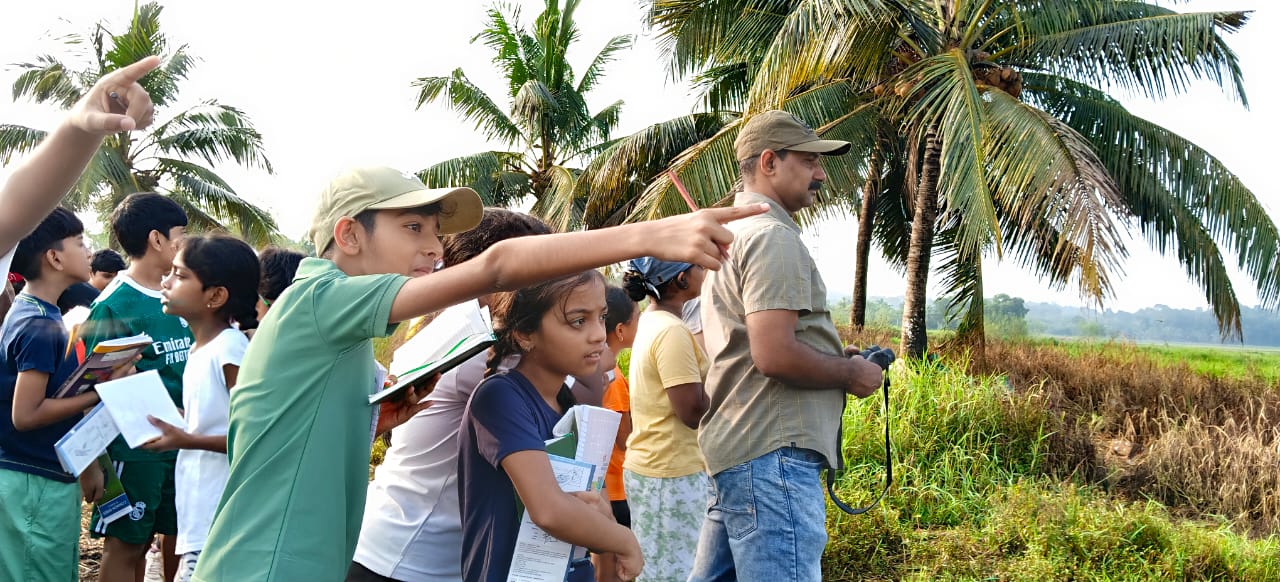
Set against the calm expanse of mist-covered paddy fields, the third cohort of top-performing students from the Wings of Awareness project assembled for their advanced bird-watching field session at the Kadappooru Bird Study Centre. This batch consisted of students from the school; Aravinda Vidyamandiram Pallickathodu, Ebenezer International Residential School Ettumannoor, and HSS & VHSS Brahmamangalam.
The programme commenced with a comprehensive orientation by Dr. Punnen Kurian, who elaborated on the ecological relevance of the sanctuary and framed the objectives for the day’s exploration. This was followed by a formal welcome address by members of the Winds Park Society, reaffirming their commitment to nurturing conservation-focused educational initiatives.
In recognition of their accomplishments, the students were presented with specially sponsored T-shirts and caps by the Buimerc India Foundation, serving as tangible tokens of appreciation and as visible emblems of their dedication to learning, field excellence, and conservation responsibility.
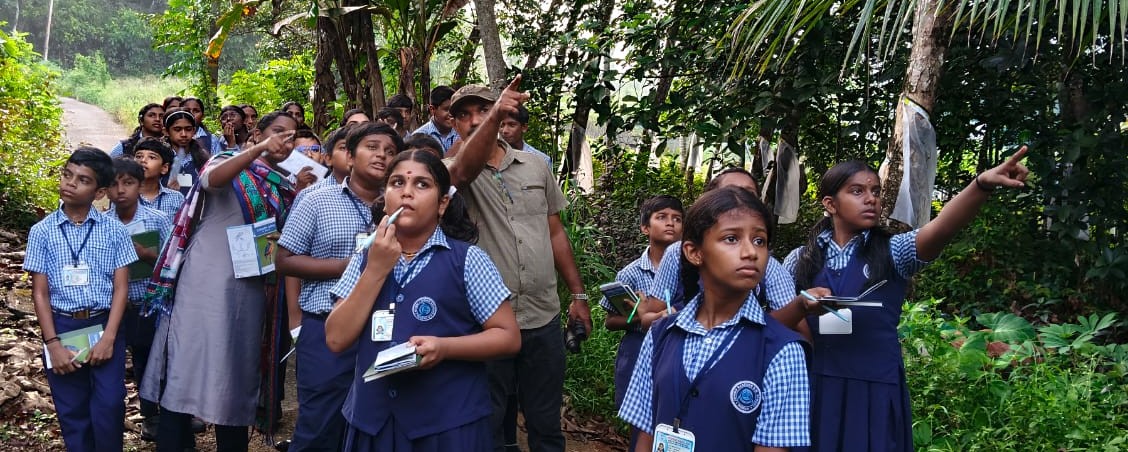
The group undertook an intensive bird-watching session along the Chingamkarichal trail, guided by ornithology expert Mr. Sarath Babu of TIES. The session was supported by project intern Surya and Ms. Ananya, Manager of the Green Auditing Department at TIES, who provided technical assistance and facilitated systematic field documentation.
The programme was further strengthened by the active participation of accompanying teachers—Ms. Ashyl from Aravinda Vidyamandiram and Ms. Priya Kumari from Ebenezer International Residential School—whose involvement ensured academic continuity and encouraged reflective learning among the students.
A number of 54 different species of birds sighted during the session. The team was able to observe a diverse range of waterbirds, including Glossy Ibis, Painted Stork, Watercock, and Purple Heron. In the surrounding trees, species such as Forest Wagtail, Asian Emerald Dove, and Spotted Dove were also sighted.
The session provided students with the opportunity to encounter bird species that are not commonly found in their immediate home and school environments, thereby broadening their field exposure and strengthening their practical understanding of habitat-specific avifauna.
The morning session drew to a close with breakfast and refreshments at the centre, offering students an opportunity to interact informally and exchange observations from the field. Conversations gradually extended beyond species sightings to meaningful discussions on wetland conservation, habitat integrity, and the responsibility of young birders in safeguarding biodiversity.
More than a routine field outing, the experience functioned as a structured extension of their learning journey—sharpening analytical observation, deepening ecological awareness, and reinforcing the project’s mission of developing knowledgeable, responsible, and field-competent young naturalists.


Ecological Research Campus, K.K Road, Velloor P.O Kottayam, Kerala-686501(INDIA)
Contact : +91-9497290339
TIES Communication: +91-9633723305
TIES Office: +91-4812957050
Email : info@ties.org.in
Alternate Email : tropicalschool@gmail.com