
2026-02-24
Against
the tranquil backdrop of mist-laden paddy fields, the second batch of
top-performing students from the Wings of Awareness project gathered for their
advanced bird-watching field experience at the Kadappooru Bird Study Centre,
a serene ecological hub managed by the Winds Park Society. Nestled amidst
wetlands, streams, and expansive agricultural landscapes, the centre serves as
a living classroom — fostering conservation awareness, biodiversity research,
and community-based environmental education.
As
the Wings of Awareness project, implemented by the Tropical Institute of
Ecological Sciences (TIES) and supported by the Buimerc India Foundation,
progresses into its second phase, a select group of high-performing students
gathered for this specialised field experience. Chosen for their consistent
engagement and analytical accuracy on the CROW App, these students arrived not
merely as participants, but as young observers ready to refine their field
skills.
The
session commenced with an informative introduction to the sanctuary by Dr.
Punnen Kurian, who outlined the ecological significance of the site and set the
context for the day’s field exploration. This was followed by a formal welcome
address delivered by the members of the Winds Park Society.
The
representatives present on the occasion included Shri Baby Joseph, Shri Biju
Joseph, Shri P. T. Somashekaran, Shrimathi Tina Maliyekal, Shri G. Gopakumar,
Shri Libumon, Shri Joshy Joseph, Shri Bibin Mathew, and Shri Biju Kollappalli,
whose presence underscored the Society’s continued support for
conservation-oriented educational initiatives.
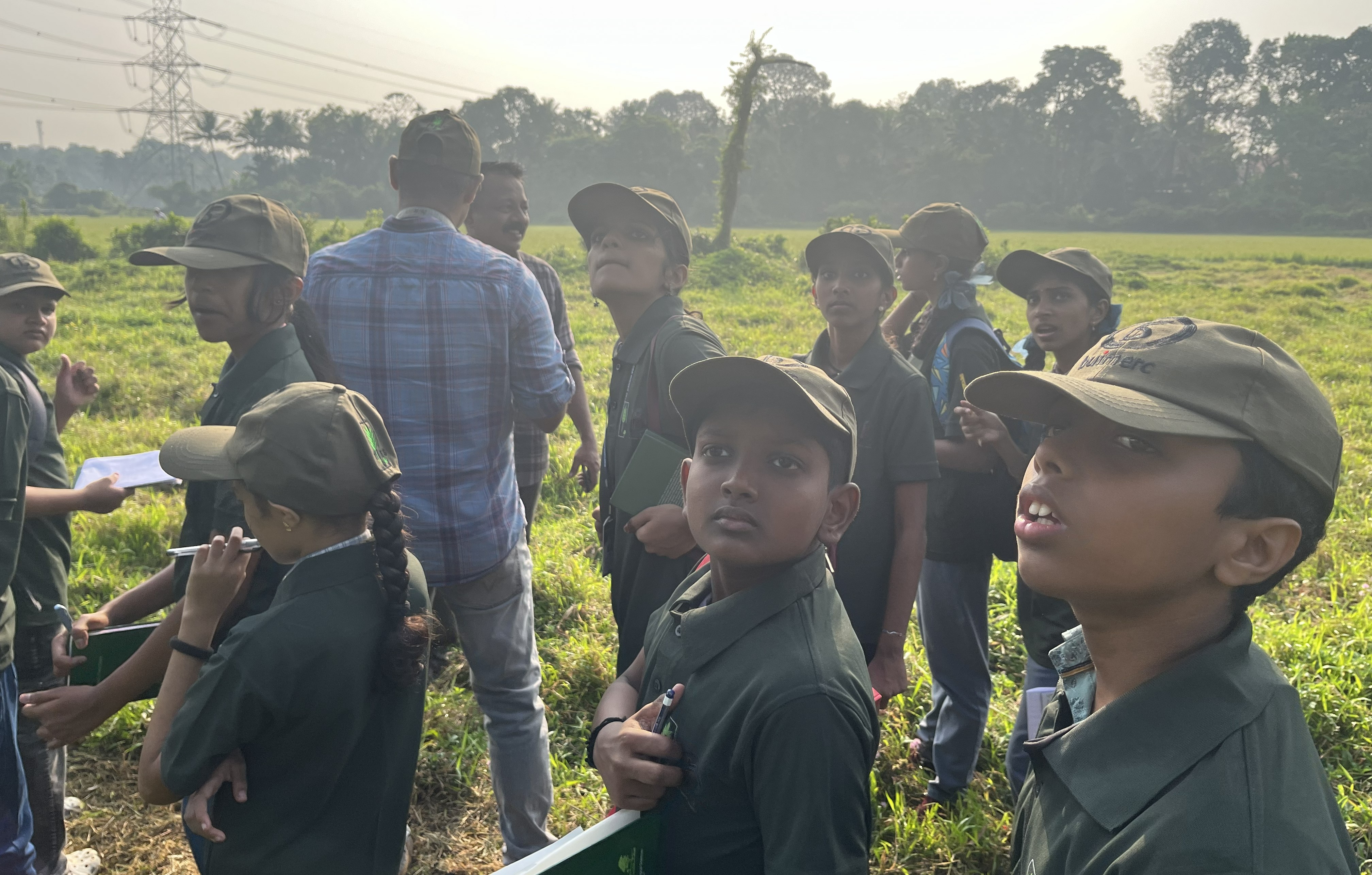
As a proud recognition of their achievement,
the students were presented with T-shirts and caps sponsored by Buimerc India
Foundation — a visible symbol of their commitment to learning and conservation.
The
trail was led by bird-watching expert Ajayan Kumar M.N., alongside Project
Officer Suhaana and Project Intern Vinodini S., with the valuable support of
the accompanying teachers: Sandeep S. Nair and Aradhi teacher from Mattakkara
HSS, and Ambily teacher from Crossroads School. Their collective guidance
ensured that the experience was both educational and engaging.
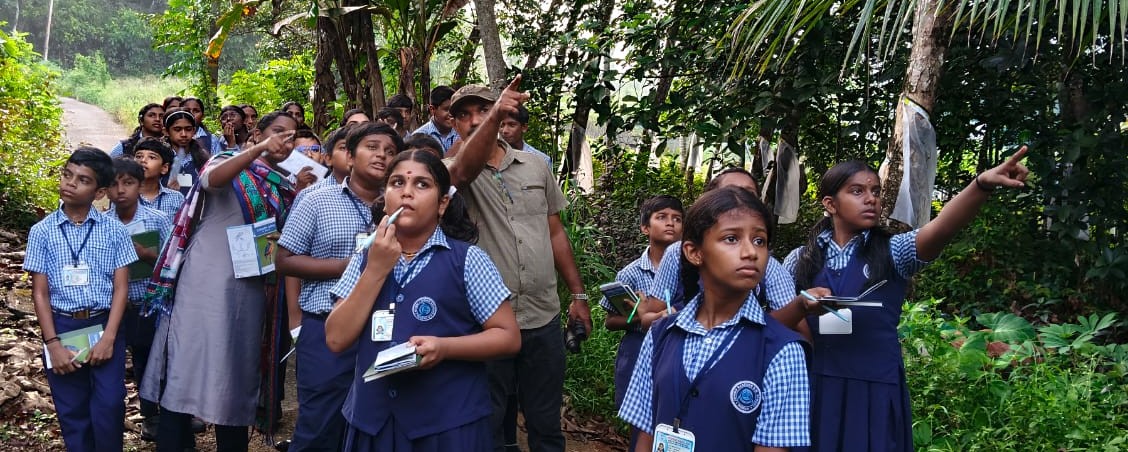
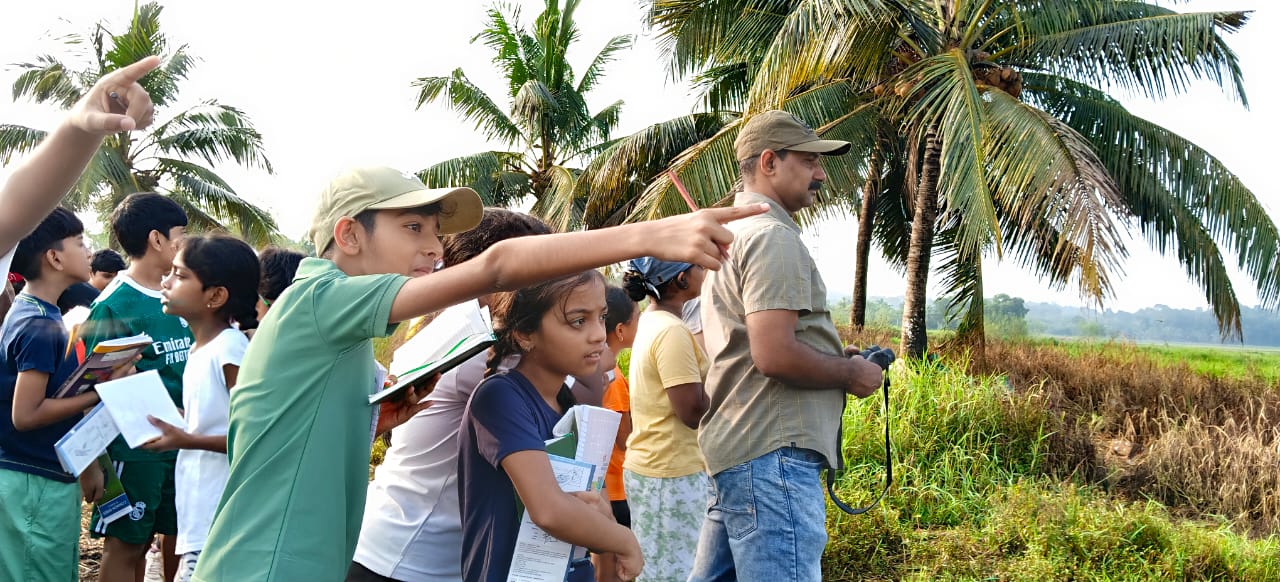
As
the group moved along Vattukulam trail filled with paddy fields and streams, the
students demonstrated attentiveness and growing expertise. Their discussions
reflected familiarity with species behaviour, habitat preferences, and
identification markers. By the conclusion of the session, 46 bird species had
been documented. Barn Swallows skimmed swiftly across the open fields, Indian
Rollers flashed their vivid blue as they darted between perches, while an array
of wetland birds — including Purple Herons, Cattle Egrets, Black-headed Ibises,
and other heron species — stood poised along the marshes, enriching the
landscape with their presence. A particularly engaging moment was the sighting
of a Baya Weaver’s nest — an intricate structure that sparked conversations
about nesting behaviour and adaptation.
The
morning concluded with breakfast and refreshments at the centre, where
reflections on sightings seamlessly transitioned into broader discussions on
conservation and habitat preservation. The session was not merely a field
visit, but a refined learning experience — strengthening observation skills,
fostering ecological sensitivity, and reinforcing the project’s objective of
nurturing informed and capable young naturalists.




Ecological Research Campus, K.K Road, Velloor P.O Kottayam, Kerala-686501(INDIA)
Contact : +91-9497290339
TIES Communication: +91-9633723305
TIES Office: +91-4812957050
Email : info@ties.org.in
Alternate Email : tropicalschool@gmail.com